Setting up the nursery is one of the most exciting parts of expecting a baby. It is also the moment to get your baby's sleep space right. The good news is that safe sleep is simple, and it does not depend on buying expensive kit. This guide sums up the NHS safe sleep advice in plain English, so you can get everything ready with confidence. It is general guidance only; your midwife or health visitor can answer questions about your own baby.
The basics: back to sleep, in your room
The NHS advises always putting your baby to sleep on their back, for every sleep, day and night. For the first six months, the safest place for your baby to sleep is in a cot or Moses basket in the same room as you. That means the nursery is often for changing, feeding and storage at first, with the cot in your bedroom.
Choosing a cot and mattress
- A firm, flat, waterproof mattress that fits the cot snugly with no gaps around the edges. Your baby's head should not sink into it.
- A new mattress is best. If you use a second-hand cot, the NHS suggests buying a new mattress if you can.
- A cot that meets British Standard BS EN 716, with bars no more than 6.5cm apart.
Space can be tight when the cot is in your room for six months. A space saver cot or a cot that converts to a bed later are both good options.
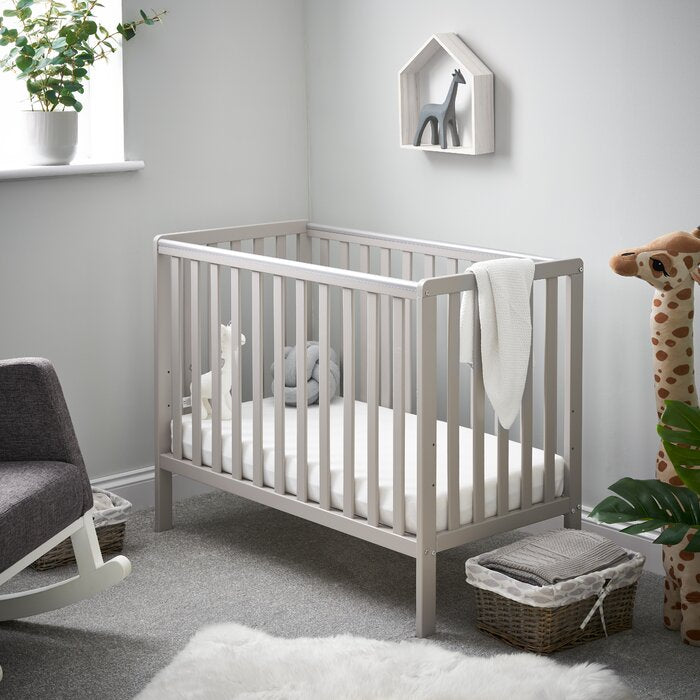
A compact space saver cot with a breathable, water-resistant foam mattress included and a three-position base. Ideal for smaller bedrooms. View product
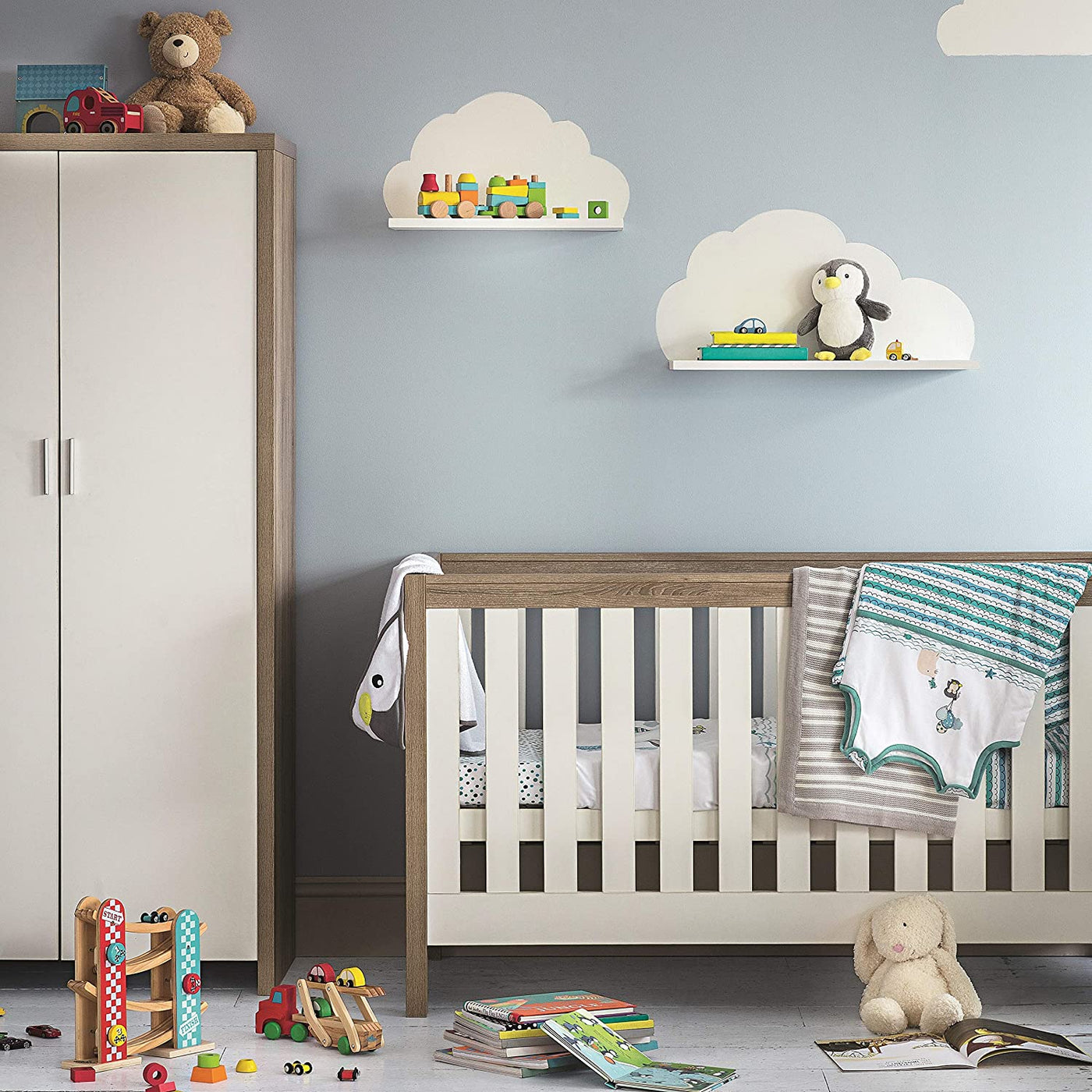
A white and oak cot bed with a three-position base that converts into a toddler bed, so it grows with your child. Takes a 70 x 140cm mattress. View product
Keep the cot clear
A safe cot is a simple cot. The NHS advises against pillows, duvets, cot bumpers and loose bedding, and says there should be no soft toys that could cover your baby's face. Baby nests and pods are not suitable for sleep. It can look bare, but that is exactly how it should be.
Blankets and sleeping bags
Feet to foot
If you use blankets, place your baby with their feet at the foot of the cot, so they cannot wriggle down under the covers. Tuck the blanket in firmly, no higher than their shoulders.
Cellular blankets
Cellular blankets have small holes in the weave, which makes them breathable and easy to layer up or down.
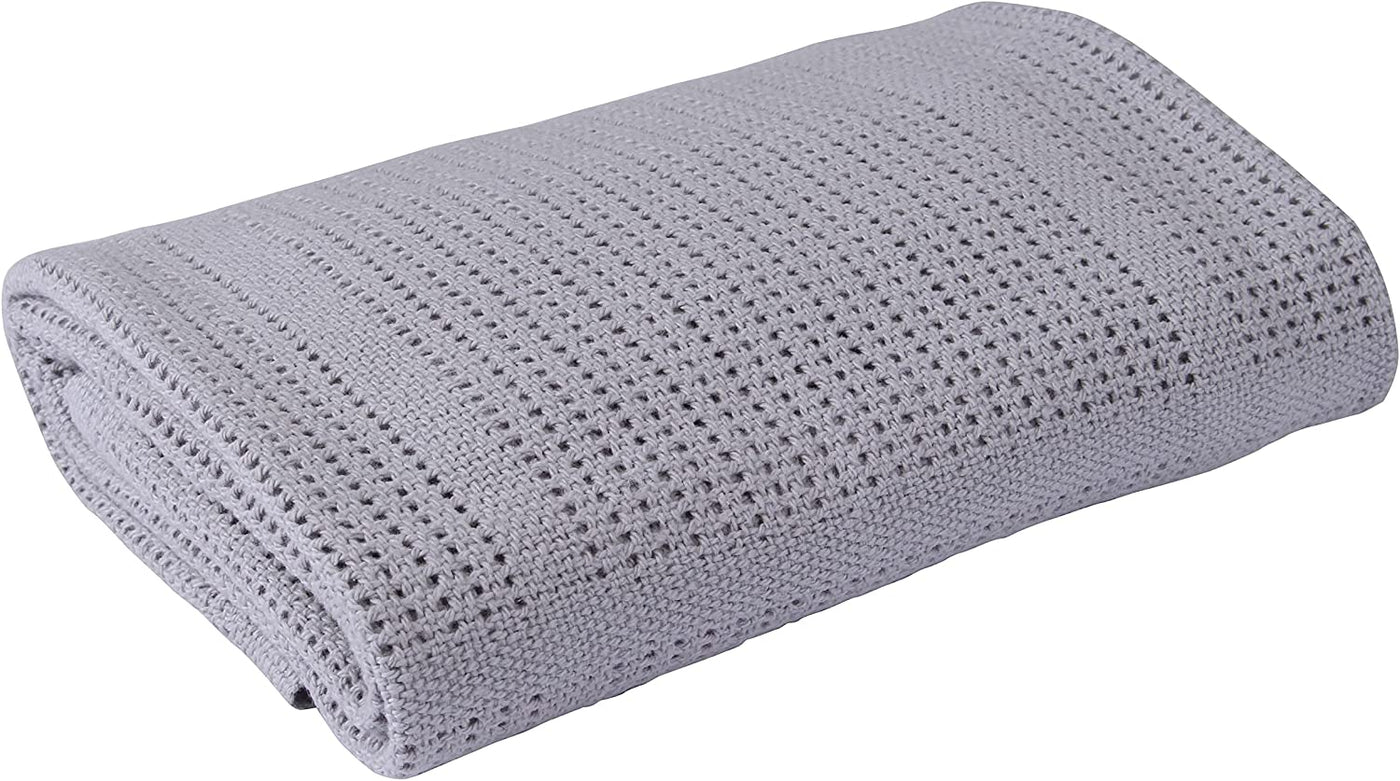
Breathable cellular cotton in a cot bed size. Layer it to suit the room temperature and tuck it in at shoulder height. View product
Baby sleeping bags
A well-fitting baby sleeping bag stops your baby wriggling under bedding. Choose one with the right tog for the season and a neck and armholes that fit, so your baby cannot slip inside.
Room temperature
Babies can overheat, so keep the room at a comfortable temperature. NHS guidance links a 2.5 tog sleeping bag to standard room temperatures of 16 to 20C. A simple room thermometer helps. Do not let your baby sleep in a hat indoors, and remove extra layers when you come in from outside, even if it means waking them.
What to avoid
- Sofas and armchairs. Falling asleep with your baby on a sofa or armchair greatly increases the risk of sudden infant death syndrome (SIDS). If you feel sleepy while feeding, put your baby down in their cot.
- Smoke. Keep your baby away from smoke, before and after birth.
- Co-sleeping when it is not safe. The NHS says co-sleeping is not safe if you or your partner smoke, have drunk alcohol, taken drugs or medication that makes you drowsy, or if your baby was born premature or small.
Lovely extras for the nursery
Once the safe sleep basics are in place, a few gentle extras can make night feeds and bedtime calmer. Keep anything with cables or cords well out of reach of the cot.

A soft, dimmable night light for night feeds and nappy changes, with a portable egg light you can carry around. View product
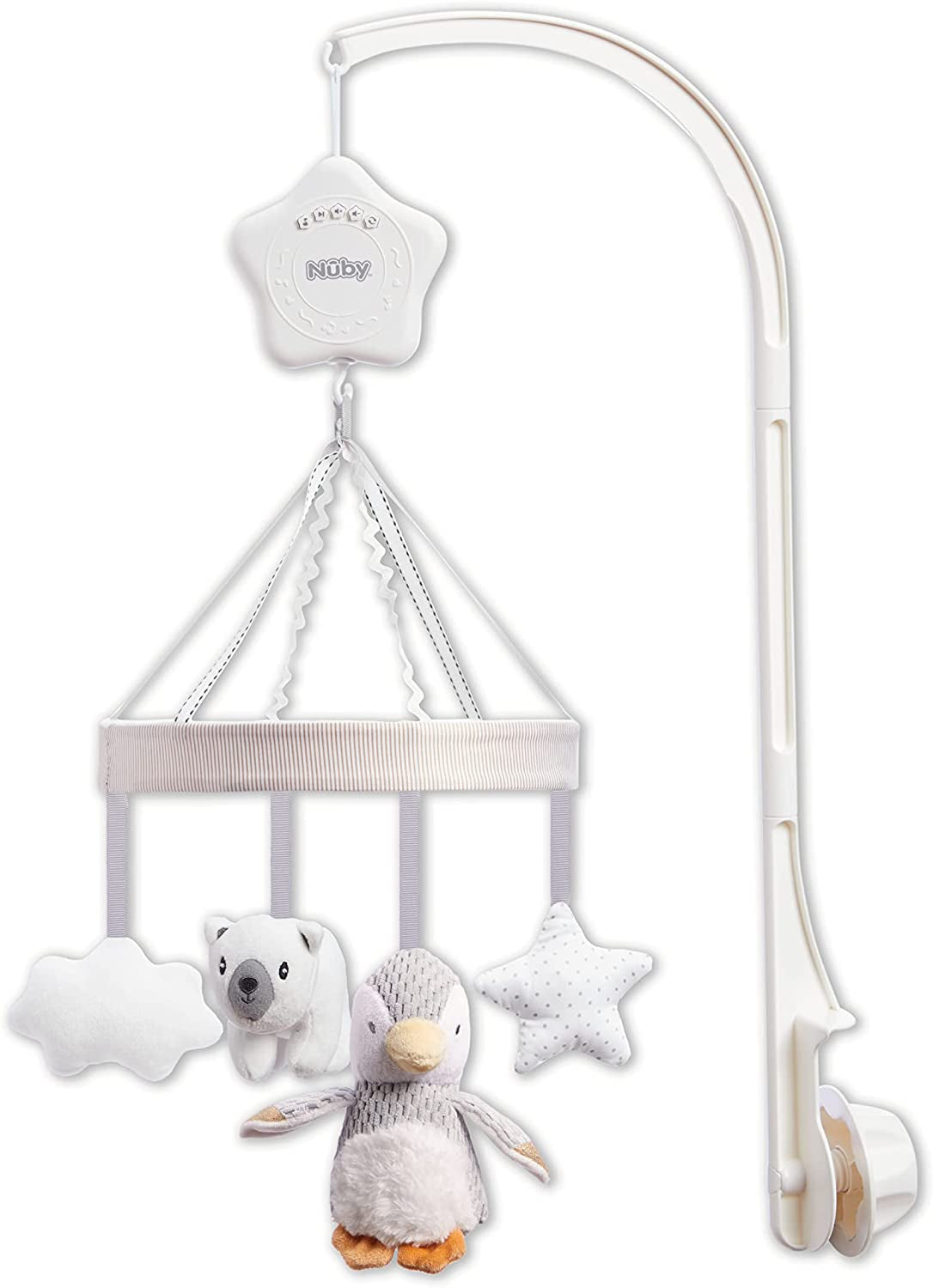
A musical cot mobile with soft characters and five lullabies. Remove it once your baby can push up on hands and knees. View product
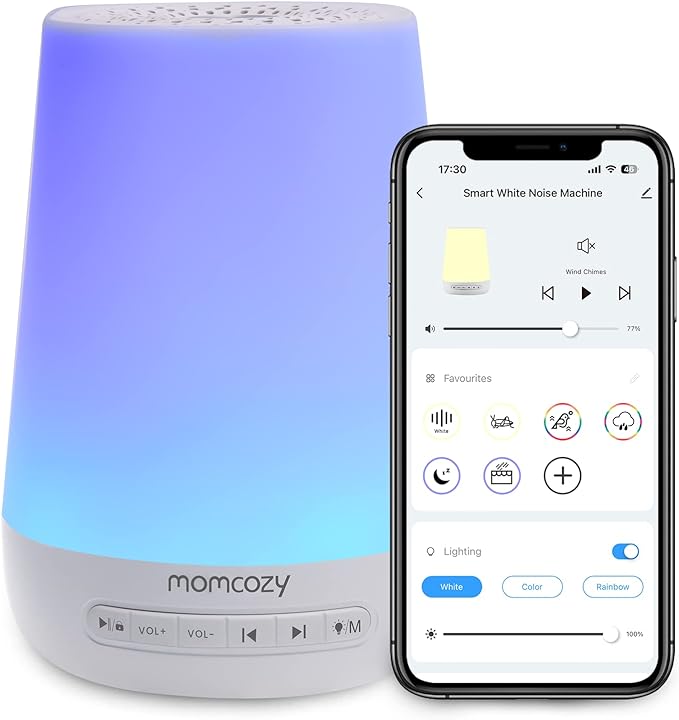
A white noise and sound machine with a gentle night light. Place it well away from the cot and keep the volume low. View product
Getting ready: a quick checklist
- Cot or Moses basket in your bedroom for the first six months
- Firm, flat, waterproof mattress that fits snugly
- Three or four fitted sheets
- Cellular blankets or a sleeping bag of the right tog
- A room thermometer
- A dim night light for feeds
For more information, see the NHS pages on safe sleep advice for babies and reducing the risk of SIDS, or talk to your health visitor. Browse our nursery furniture when you are ready.